
Fixing Accountability

Share this article:

When Everyone Is a Decision Maker, No One Is: Fixing Accountability

“We decide everything together.”

It sounds inclusive.

In practice, it often means decisions are revisited repeatedly and no one is clearly accountable when outcomes falter.

Collaboration is valuable. Diffusion of responsibility is costly.

1. Diagnose Your Current Decision Patterns

Common symptoms include:

  • Meetings where decisions resurface month after month
  • Side conversations that undermine formal agreements
  • Confusion about who owns execution
  • Frustration when results fall short but no one is responsible

These patterns echo themes explored in The Silent Growth Killer: Unspoken Conflict in Family Enterprises and Communication Strategies to Resolve and Prevent Family Business Conflict.

When decision authority is fuzzy, tension increases.

2. Define Decision Categories and Owners

Not all decisions carry the same weight.

Create clear categories:

  • Strategic
  • Operational
  • Emergency
  • Ownership-level
  • Family-only matters

Then assign:

  • Who decides
  • Who provides input
  • Who must be informed

This framework prevents unnecessary escalation and protects leadership bandwidth.

3. Separate Voice From Vote

Everyone deserves to be heard.

Not everyone should vote on every issue.

If someone carries operational responsibility, they should carry decision authority in that area.

Inclusion does not require universal veto power.

4. Document and Communicate Decisions

Write down:

  • What was decided
  • Who decided
  • Why it was decided
  • When it will be reviewed

This reduces revisionist history and quiet reinterpretation.

If accountability conversations uncover deeper tension, resources like How to Handle Family Business Conflict provide additional guidance.

Clarity is not harsh. It is stabilizing.
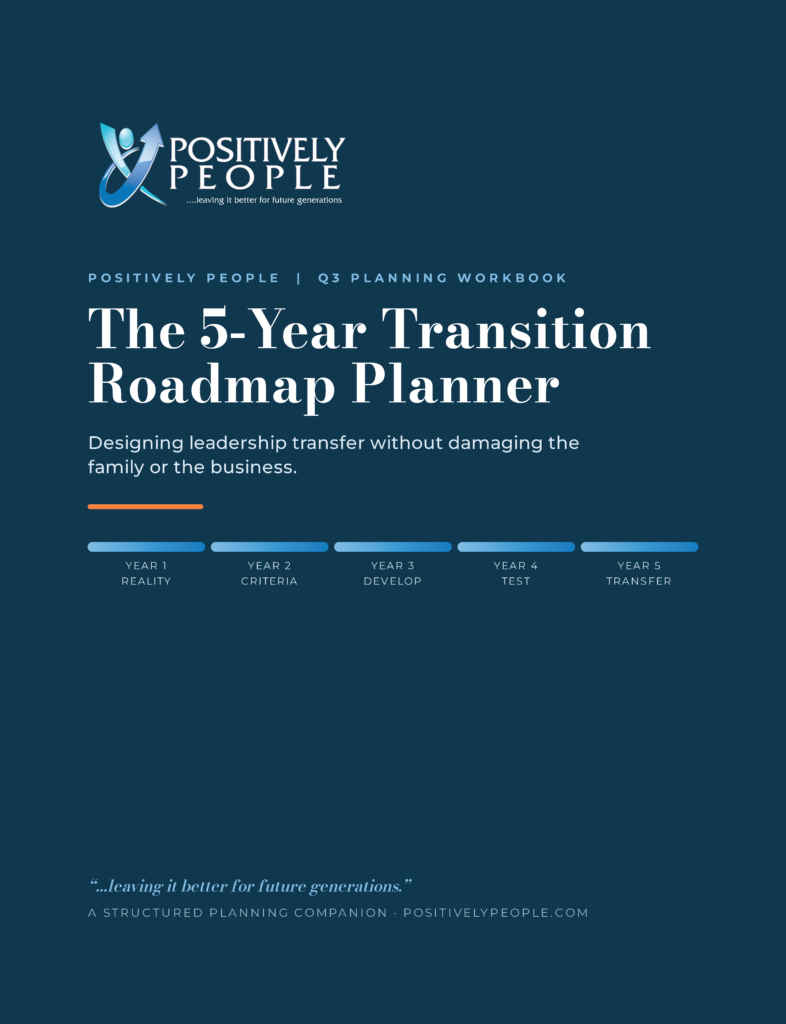
Download our 5-Year Transition Roadmap Planner

A well-designed roadmap protects two things at once: the legacy of the business and the relationships inside the family.

A step-by-step workbook that turns this framework into a plan your whole family can build around. Inside you'll find:

  • A transition readiness assessment to see where you stand today
  • Year-by-year milestones and planning pages
  • Development planning tools for your rising generation
  • A risk register to surface what could derail the plan
  • Communication architecture templates so the right people hear the right things at the right time
The 5‐Year Transition Roadmap Planner

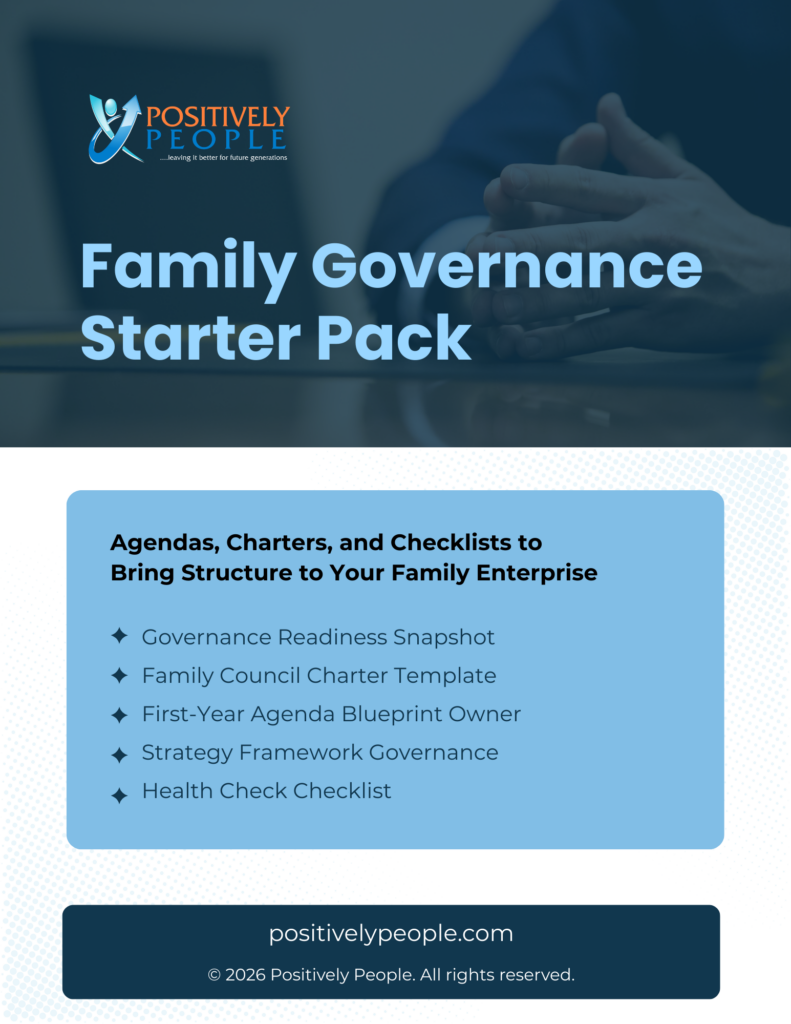
Download the Family Governance Starter Pack

If your family is ready to move from informal agreements to intentional governance structures, we created a practical starting point.

The Family Governance Starter Pack: Agendas, Charters, and Checklists includes:

  • A Family Council Charter template and first-year agenda plan
  • A simple Owner Strategy Document template
  • Role criteria worksheets for executives and board seats
  • A Conflict Resolution Map with sample language
  • An Annual Governance Health Check checklist

This resource is designed to help families begin building governance structures that support clarity, alignment, and long-term continuity.

Download the Family Governance Starter Pack
Free Online Assessment
Build a Legacy That Lasts

Get started with our free Continuity Planning Assessment and identify potential gaps, set clear goals, and gain expert insights to safeguard your organization’s future.